 DMediQ
Live Patient Monitoring
Live Patient Monitoring & Medical Device Integration
One central station for every monitored bed — with early-warning scores and alarms that nurses can't miss.
Key features
Device connections
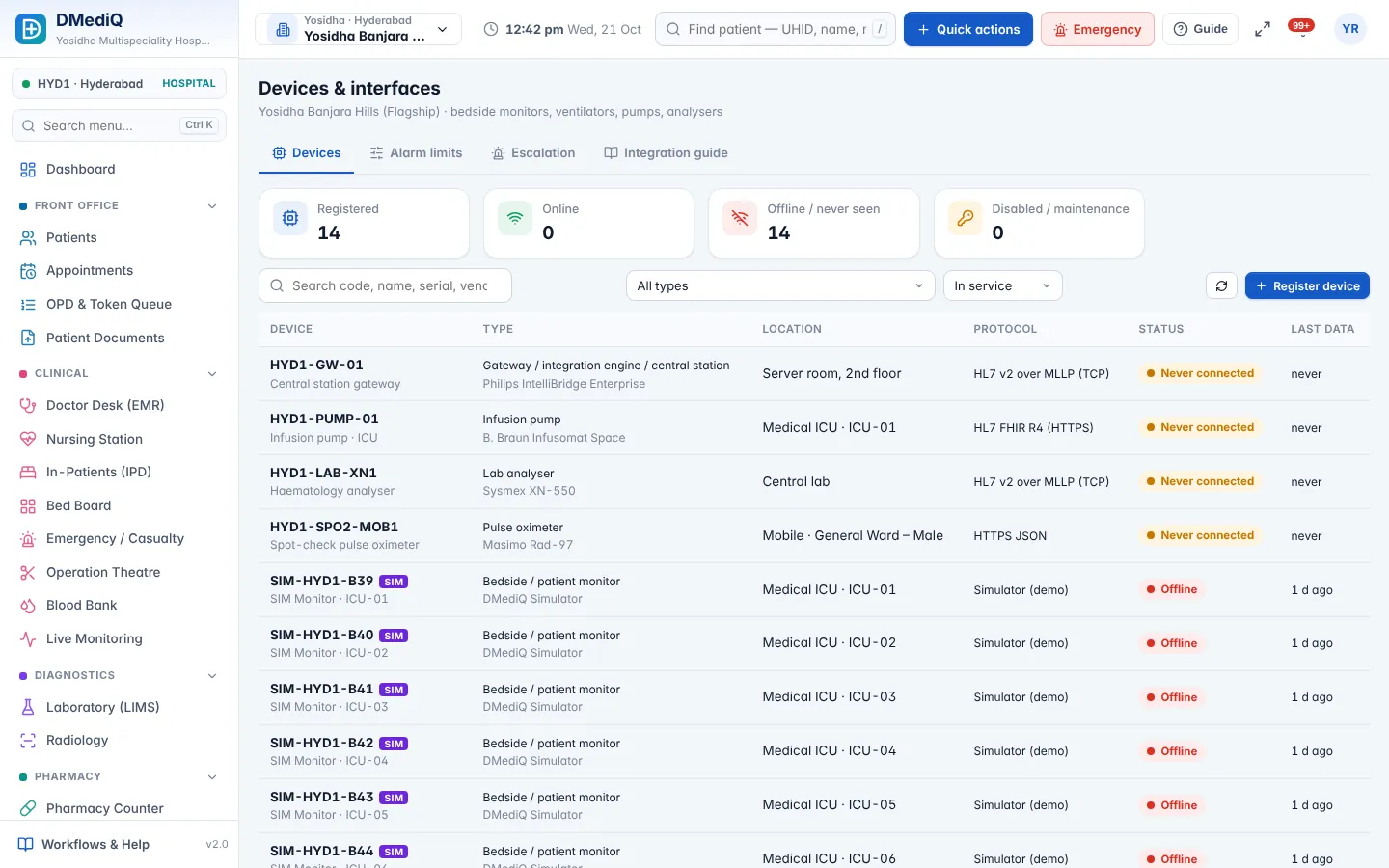
HL7 v2 (MLLP), FHIR Observation and JSON APIs; works with most multi-parameter monitors.
Live vitals
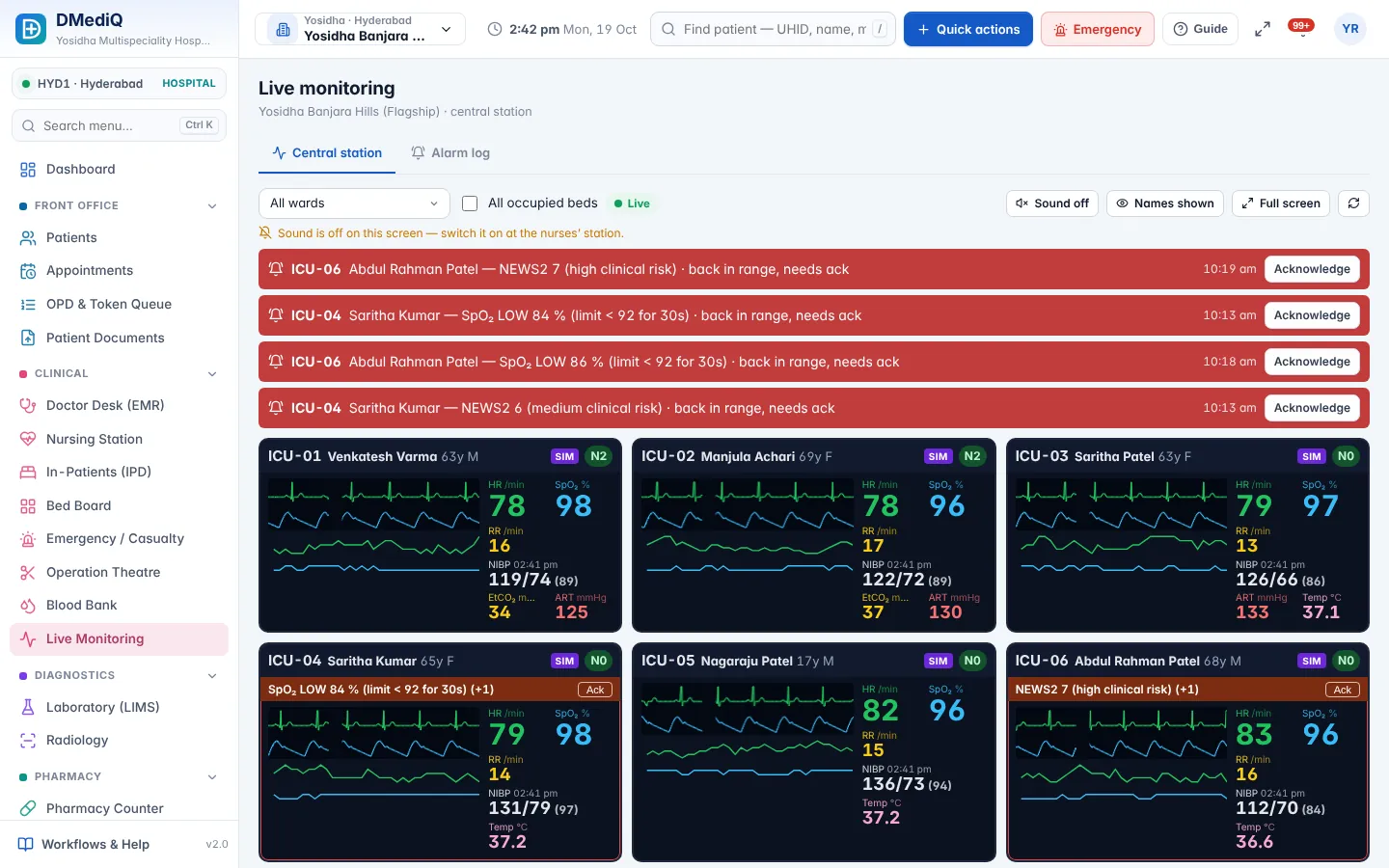
HR, SpO₂, RR, NIBP and temperature per bed, updating in real time.
Early warning (NEWS2)
Automatic NEWS2 scoring with low/medium/high clinical risk banners.
Alarms & escalation
Configurable limits, sustained-duration rules, acknowledgement and alarm log.
Charted automatically
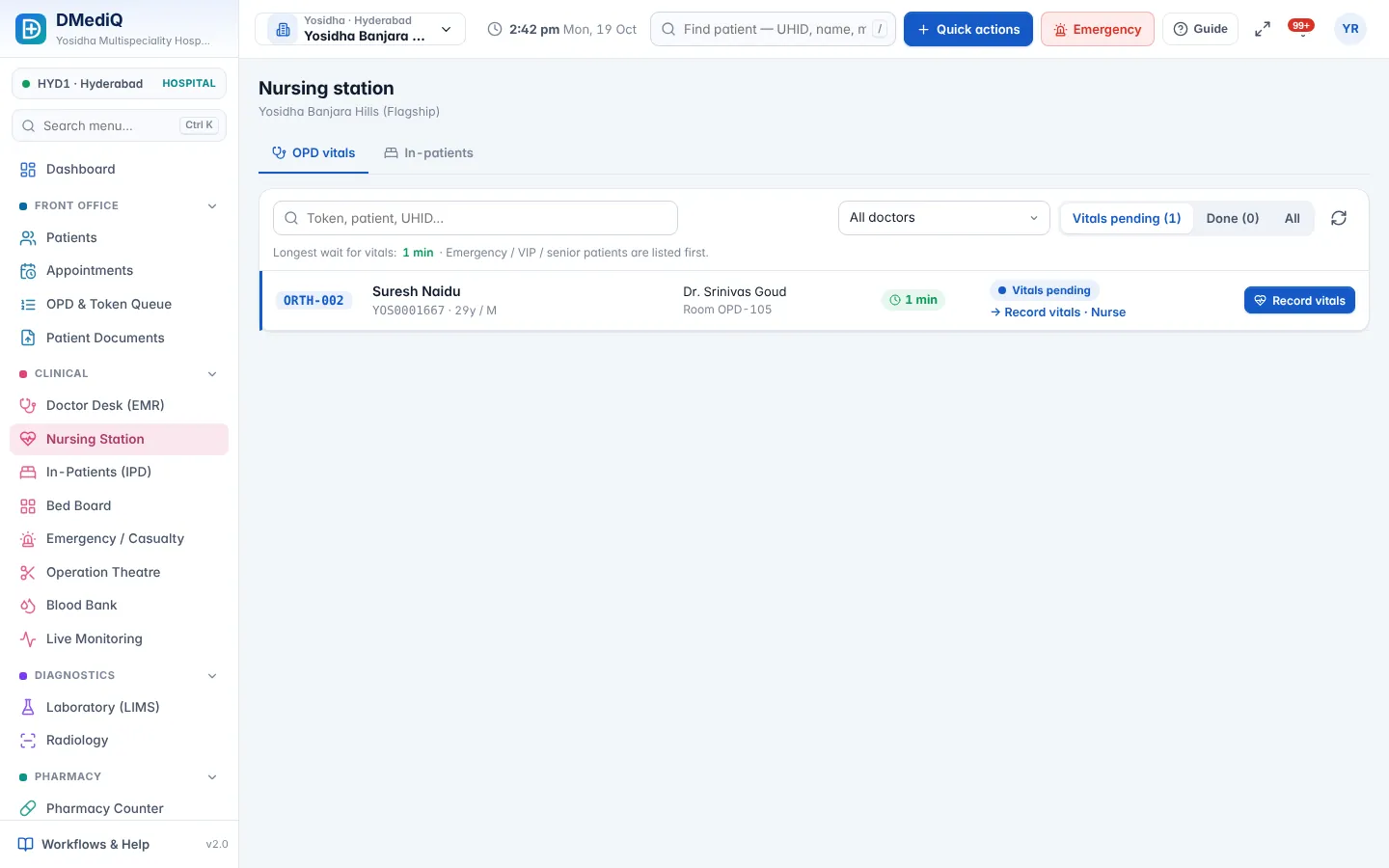
Readings flow into the nursing chart — no re-typing.
Simulator for training
A built-in simulator for demos and staff training.
More screens
Example: catching deterioration early
- Step 1
ICU-04 SpO₂ falls below 92% for 30 seconds → red alarm at the nurses' station.
- Step 2
NEWS2 rises to 6 (medium risk); the duty doctor is alerted.
- Step 3
Nurse acknowledges, intervenes; values return to range and the alarm log keeps the record.
Illustrative example with sample data.
FAQ — Live Patient Monitoring
Does it replace the monitor's own alarms?
No. DMediQ is a secondary display and record; bedside monitor alarms stay primary.
Which monitors are supported?
Most monitors that output HL7 v2 or FHIR, or can send data through a gateway. We help test your models during setup.
What happens if a device goes offline?
The central station marks it offline and logs the gap, so nurses know to check the bedside.
Can we try it without real devices?
Yes. The built-in simulator generates realistic vitals for demos and training.
Works together with
Hospital Management (HIS)
Run every department of your hospital on one connected platform — from the front desk to discharge, across one branch or fifty.
OPD & Appointments
Book, check in, triage and call patients in order — with live doctor load and zero confusion at the front desk.
EMR & Doctor Desk
Give doctors one screen with the full patient history, quick templates and e-prescriptions that print in seconds.